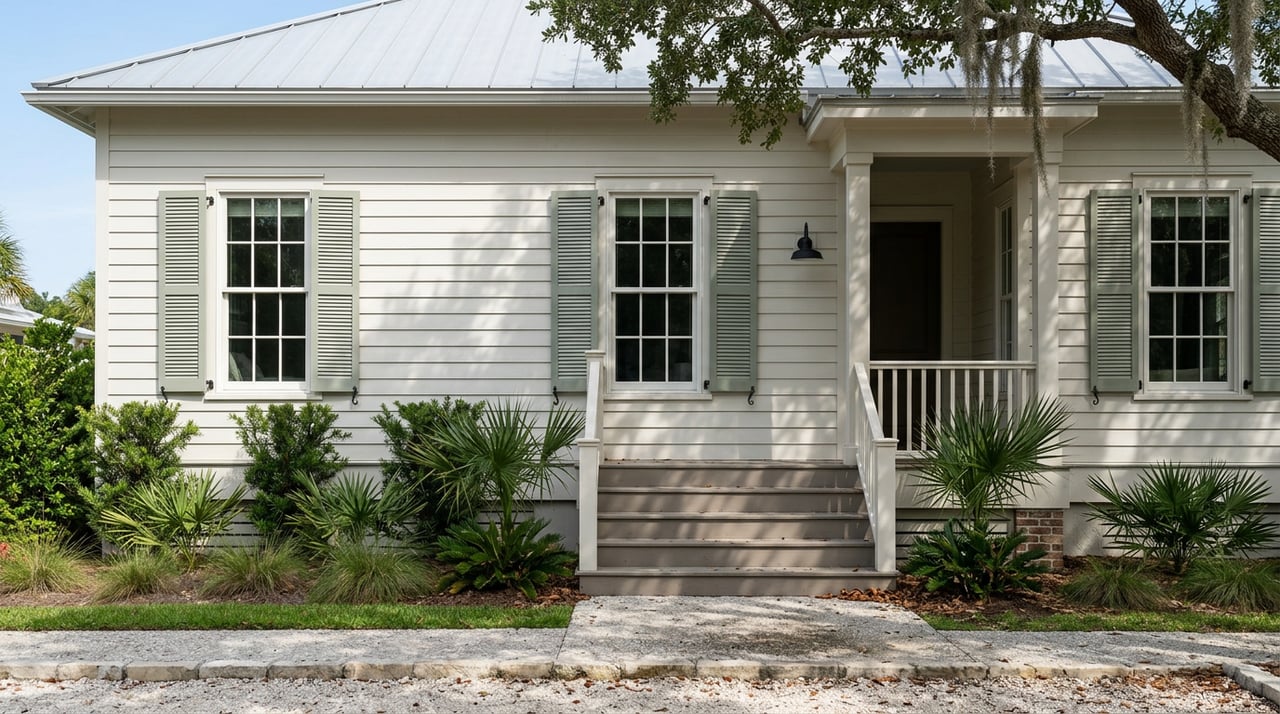
Jacksonville Beach Home Insurance and Flood Zone Guide
August 6, 2026
August 6, 2026
Two houses go under contract on the same street in Jacksonville Beach this month. Same footprint, same list price, same year built. One buyer closes into a payment they can carry for a decade. The other terminates on day 12 of the inspection period because the insurance quote came back four figures higher than the pre-approval assumed. Neither buyer negotiated harder than the other. They just read the property differently before they signed.
That gap is the story of the Jacksonville Beach market right now. The median list price sits around $607,500 to $686,000 depending on the tracker you check, sale-to-list is running near 96 percent, and homes are taking anywhere from 68 days on Movoto's July 2026 reading to 114 days on Houzeo to 133 days on Broker One's local dataset. About a third of active listings have taken a price reduction. Buyers have room. The question is what to spend that room on.
For years the Jacksonville Beach conversation was about price per square foot and how many offers a well-marketed listing would pull. In 2026 the constraint has moved. Insurance is now the variable that decides whether a house at $675,000 actually pencils to the same monthly payment as a house at $650,000. A Grace Realty summary of the statewide market put it bluntly: buyers are no longer asking sellers to come down $20,000, they are asking what the home insures for and walking when the answer is ugly.
Northeast Florida rates have softened in aggregate. Augustyniak Insurance Group's analysis of more than 2,000 active Jacksonville policies puts the 2026 median homeowners premium at $3,004 with a mean of $3,454, and the Florida Office of Insurance Regulation reported this July that home insurance rates decreased in 51 counties year to date. Citizens filed for an 8.7 percent average statewide decrease effective spring 2026 renewals, its first cut since 2015. Seventeen new carriers have entered Florida since the 2022 and 2023 tort reforms, and litigation filings are down more than 35 percent from their 2021 peak.
Those averages do not describe an oceanfront cottage two blocks off 1st Street. Once you cross into the Beaches, three property-specific inputs decide the real number.
| Input | What It Means In Jacksonville Beach | Cost Range |
|---|---|---|
| FEMA flood zone | Oceanfront and near-oceanfront blocks sit in Zone VE, the coastal high-hazard designation with wave action and elevation requirements. Intracoastal-adjacent and mid-peninsula lots often fall in Zone AE. Homes further west are typically Zone X. | NFIP AE policies commonly $800 to $2,500 per year. VE runs materially higher and can be among the highest NFIP premiums FEMA writes. Zone X carries no federal mandate. |
| Roof age | Florida Statute 627.7011 protects roofs under 15 years. Past 15 an inspection documenting five or more years of useful life keeps private-market options open. Past 20 to 25 the carrier pool narrows sharply. | A roof needing replacement before renewal can add $15,000 to $40,000 to the true cost of the home. |
| Wind mitigation credits | Documented on the OIR-B1-1802 form, which the Florida Office of Insurance Regulation significantly updated effective April 1, 2026, the first major revision in more than a decade. Insurers began applying credits under the new form in July 2026. | Inspection costs $100 to $150, valid five years. Credits commonly worth $200 to $900 or more per year. Statewide maximum reaches 88 percent of the windstorm portion of premium, though credits are not cumulative. |
Every offer written on a Beaches home should be priced against those three lines before the earnest money is wired. FEMA's Flood Map Service Center returns the zone in about ninety seconds. The listing agent can produce the current roof permit and any existing OIR-B1-1802. If either document is missing, that absence is the negotiation.
In a five-offer weekend, a buyer who writes contingencies around insurability loses to a buyer who does not. That is not the Jacksonville Beach market in 2026. With sale-to-list around 96 percent, homes averaging well past 60 days on market, and roughly a third of listings reduced at least once, sellers who have been sitting since spring are ready to entertain terms they would have rejected a year ago.
The specific asks that hold up in this environment:
A seller who has already dropped $25,000 in list price is generally willing to extend inspection by a week if it keeps the deal alive. A seller who has been on market since April is often willing to credit the cost of a new wind mit inspection at closing.
Two statutes govern how a Florida carrier is allowed to treat your roof. Statute 627.7011 says an insurer cannot refuse to write or renew a homeowners policy solely because the roof is under fifteen years old. Once the roof crosses fifteen, the homeowner has the right to submit a condition report, and if that report documents at least five years of remaining useful life, age alone is no longer a valid basis for denial.
In practice most carriers writing at the Beaches want a condition report in the fifteen to twenty year window and start declining somewhere past twenty. If you are buying a home with a 2008 or earlier roof, the question is not whether it leaks. The question is which of the seventeen new carriers is willing to underwrite it at what price, and whether the seller will credit or replace before closing.
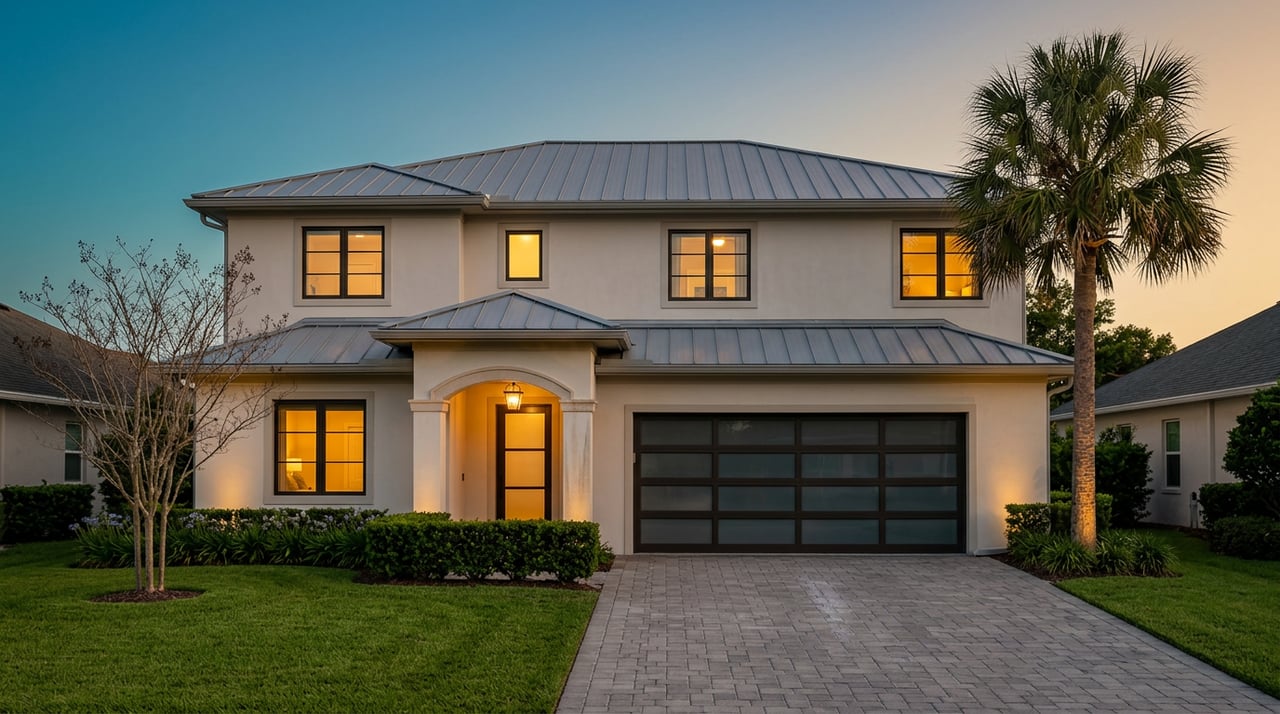
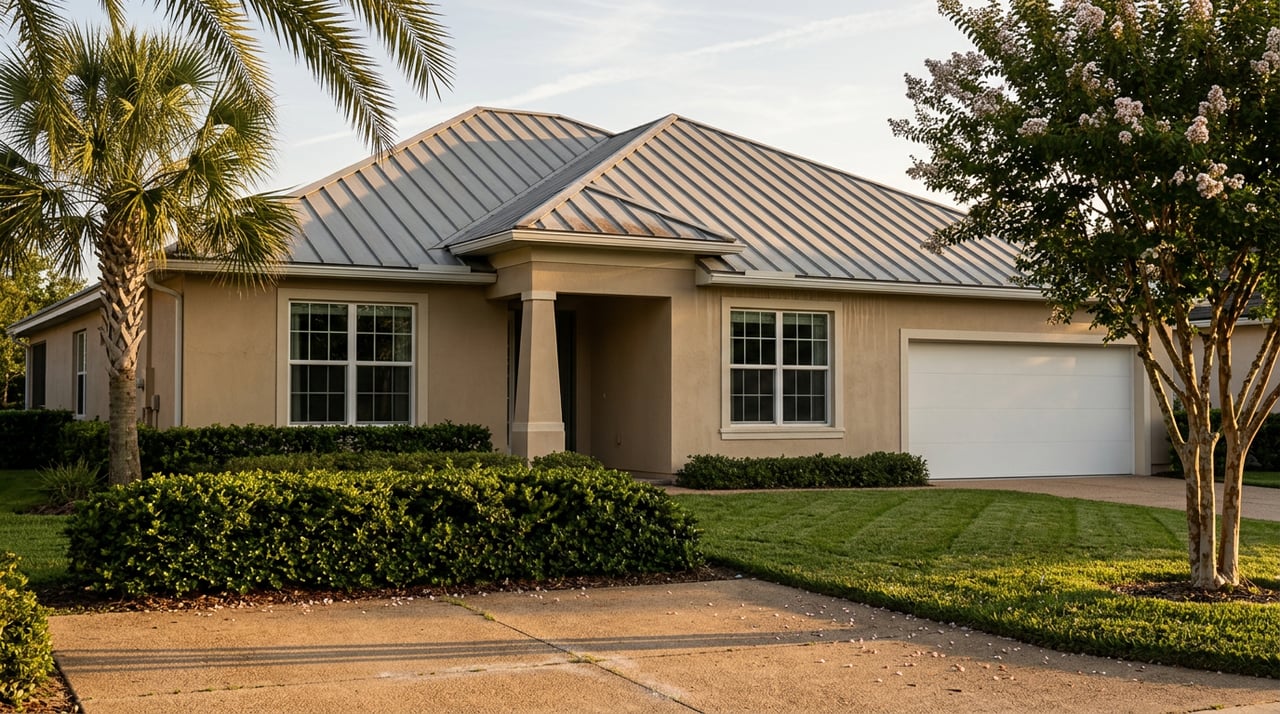
Beaches-specific wrinkle worth flagging: hip roof shapes earn a materially larger wind mit credit than gable roofs because they resist uplift better. If the home you are looking at was rebuilt in the last decade with a hip profile, ring-shank fastening, and a peel-and-stick secondary water barrier, the OIR-B1-1802 credits alone can move the windstorm portion of the premium meaningfully. If it was reroofed under the old code with staples and a gable end, the same house insures very differently.
Zone VE is FEMA's designation for coastal areas subject to wave heights of three feet or more during the base flood event. Jacksonville Beach oceanfront and immediate ocean-adjacent parcels sit here, alongside Neptune Beach and Atlantic Beach ocean-facing streets. Two things follow that most buyers only learn during permitting.
First, the lowest floor of a substantially improved structure must be elevated at or above the base flood elevation plus the three-foot wave component. Renovations can trigger stricter elevation requirements than the original construction. Second, Jacksonville participates in FEMA's Community Rating System and requires new construction in flood zones to be built one foot above BFE, a standard called freeboard. Verify the elevation certificate at closing rather than assuming the builder met it.
Duval County has 608 properties with multiple flood insurance losses on file at NFIP, including 107 severe repetitive loss properties. That is a small share of the housing stock, but if the address you are writing on shows up in the seller's disclosure with flood history, price it accordingly.
Order the wind mit inspection and the flood zone verification in the first 72 hours of the inspection period, not the last. The reports take a day or two to produce, and the insurance quote depends on both. Buyers who wait until day 10 to start this sequence find themselves either asking for extensions they did not need or waiving contingencies on numbers they have not seen.
One more item worth pricing before you sign. Citizens now requires all its policyholders to carry a separate flood policy by 2027 regardless of zone, and that requirement is already in effect for many 2026 renewals. If the seller carries Citizens and you plan to assume the same coverage rather than shop, add the flood line to your payment math.
The Jacksonville Beach market has given buyers something it has not offered in years: time to read a property before writing an offer. The buyers who use that time on insurability rather than on cosmetic wish lists are the ones closing at payments they can carry.
If you are preparing an offer on a Beaches home and want a second read on the flood zone, roof, and wind mit picture before you sign, Traci Crawford will walk the specific address with you. Schedule a Strategy Session and bring the MLS sheet.
Stay up to date on the latest real estate trends.
Traci Crawford is here to provide support. Her approach focuses on comprehending your preferences and interests, ensuring a memorable and tailored property experience. Reach out to her today!